
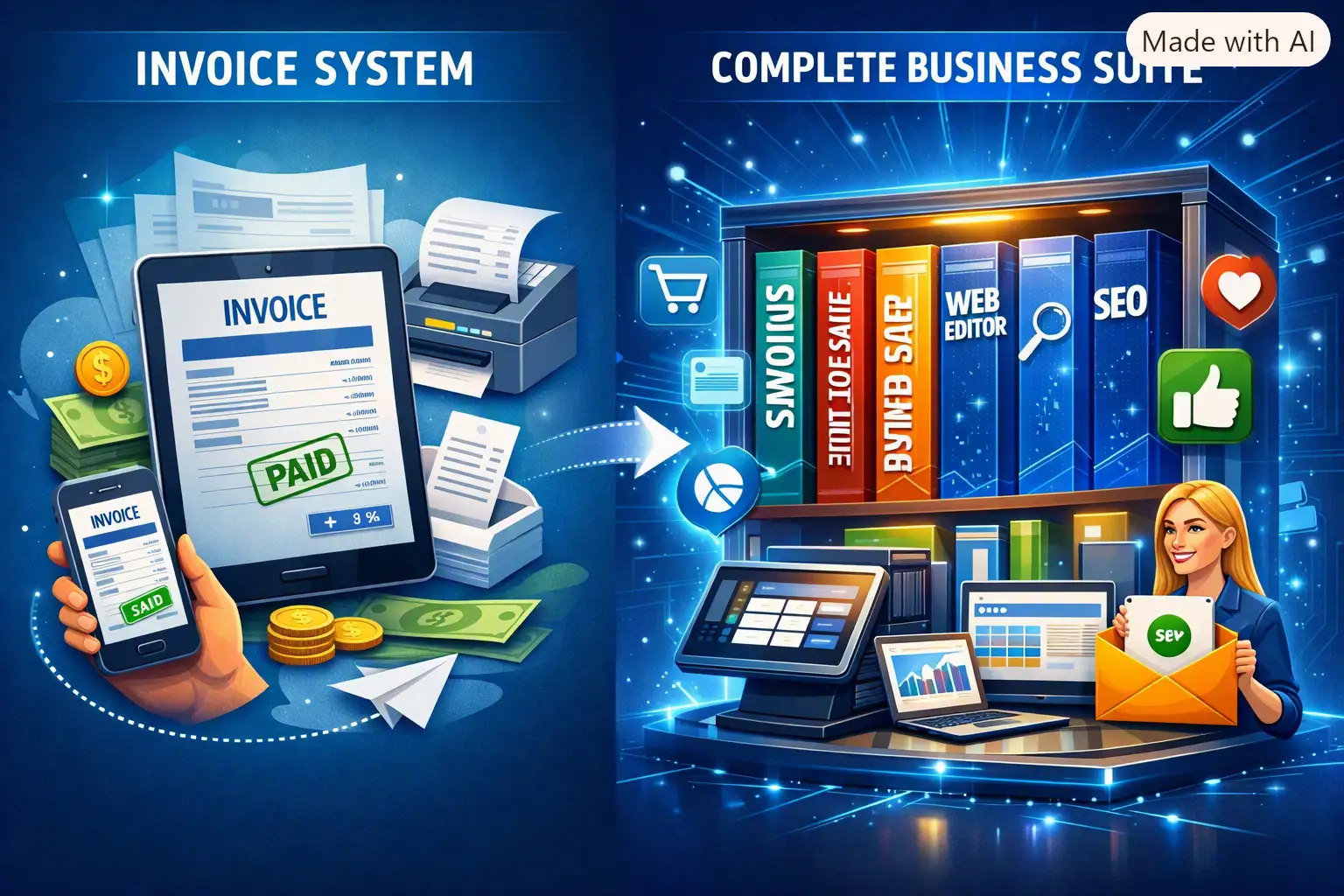
Where the system is now: one back office, several channels
A current-state tour of the system: the catalogue and the online shop, billing, compliance, the helpdesk, and the sync that holds more than one office together.
It is coming together
The state of the system, as it stands today
A plain account of what is finished, what it is made of, and how the separate pieces finally started talking to each other.
One system, several front doors
The clearest sign of that is how little has to be explained twice. A product is described once and appears in the storefront, in the counter, in a quote, in an invoice line and on a supplier order. A client is captured once and is the same client in the ledger, in their lay-by, in a licence record and in the newsletter list. Nothing is re-typed to move between them, which is where most of the time and most of the mistakes used to live.
What is in the box today
Counter and stock
A full point of sale with split payments, receipts, lay-buys and live stock deduction, installed on your own machine and running whether or not the internet is up.
Invoicing and money
Quotes that become invoices, payments and statements, branded A4 documents and email, plus recurring schedules for the bills that never change, with a preview run that writes nothing.
Firearms compliance
A licence and calibre register, storage contracts with billing, the ammunition book and the official SAPS 271 form, filled from the sale rather than typed after it.
Support and helpdesk
Support calls logged by staff, turned into tickets, and carried between two offices by signed email that neither side can forge.
Site Sync
A back office pushes its catalogue, newsletter, website pages, landing pages and now its news articles to any number of live sites, and only what changed.
Updates that arrive
A signed release feed lets a live site pull its own software updates, so a fix reaches a client without anybody logging in on their machine.
Data that stays yours
Client details, and financial notes are encrypted in the database itself, with the key held outside it.
The part that changed everything: the pieces started talking
The catalogue does not carry a cost price to the shop window, because margin is nobody else business. A landing page carries its own view count and nobody else. A mailing list stays on the site that collected it. The counter and the compliance register stay on the machine in the office, because that is where the law and the trade expect them to be. A release arrives signed, and a site will not apply one it cannot verify. These are all the same decision in different clothes: what travels is the content, and what stays is the thing that belongs to the person who owns it.
That is what coming together means here. The next work is depth rather than breadth: the same care applied to the screens that already exist, the reporting that sits on top of them, and the smaller trades that use the same machinery with different words.
See it running
The website, the shop, the counter, the paperwork and the books in one place. Ask us for a walk through the parts that matter to your business.
Request a walkthrough